Emergency at the rail crossing? Look for the blue sign!
By ANDREW UTTERBACK
Staff Writer
Emergency situations can unfold in the blink of an eye. When an incident starts to occur, time is of the essence, so it’s important to always know where to look, who to call and what to say.
This year, for the 10th anniversary of See Tracks? Think Train Week, let’s look at a small, but very important, safety tool.
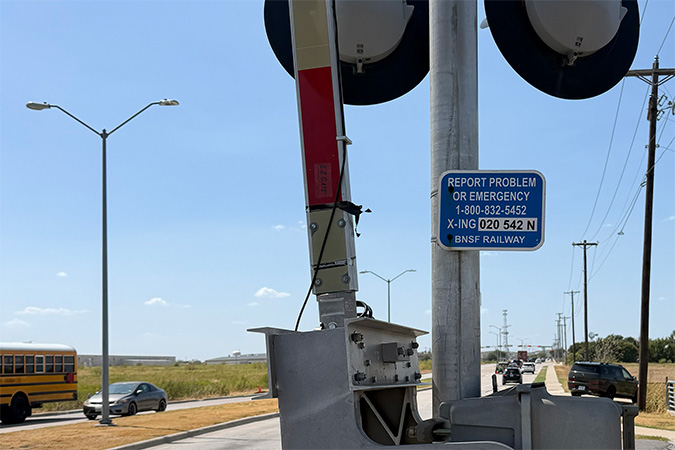
Posted on every public rail crossing is an Emergency Notification System (ENS) sign. It’s a small blue sign with two numbers on it: a phone number and a crossing number.
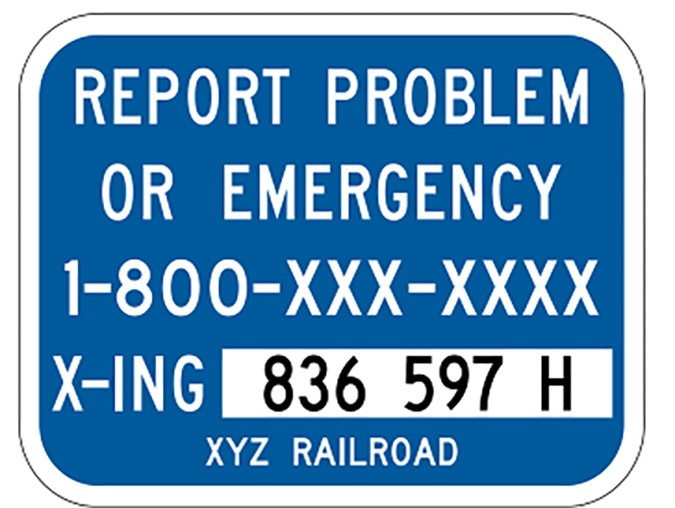
“If a vehicle is stuck on the tracks, a crossing signal is malfunctioning, or there is another safety concern, calling the number on the sign connects you directly to the railroad that operates those tracks so they can respond quickly,” said Leslie Grazer, BNSF’s director of system safety and support, safety and technical training. “Knowing where these signs are and how to use them is one simple way we can all help keep crossings safe.”
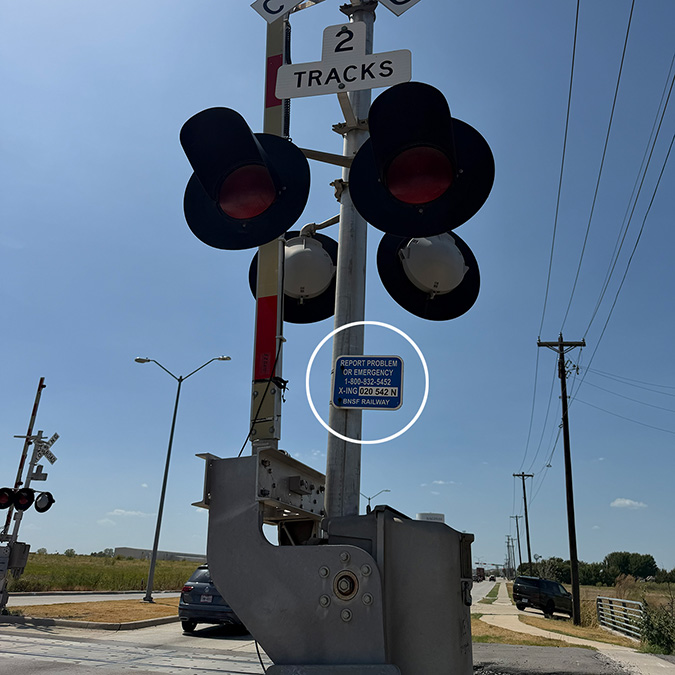
Let’s go over how to properly handle an emergency by utilizing the signs.
Imagine you’re traveling along a road, and you see that a large object fell off a vehicle and is lying on the track. You should first call the phone number on the blue sign. This would connect you with an operator who would ask you for a description of the emergency, as well as the crossing number on the sign. After the operator has the emergency details and the crossing number, they can direct the railroad to stop any approaching trains.
So, four easy steps:
-
Spot the emergency.
-
Look for the blue sign.
-
Call the phone number.
-
Describe the situation and provide the crossing number.
Check out this video from Operation Lifesaver, detailing the proper response to an emergency on the tracks.
See Tracks? Think Train Week is a great time to remember how to stay safe while we’re in the vicinity of railroad tracks, passing over them at a crossing or watching for trains from a distance. Be sure to always stay off the tracks, only cross at designated crossings and follow warning lights and signs.
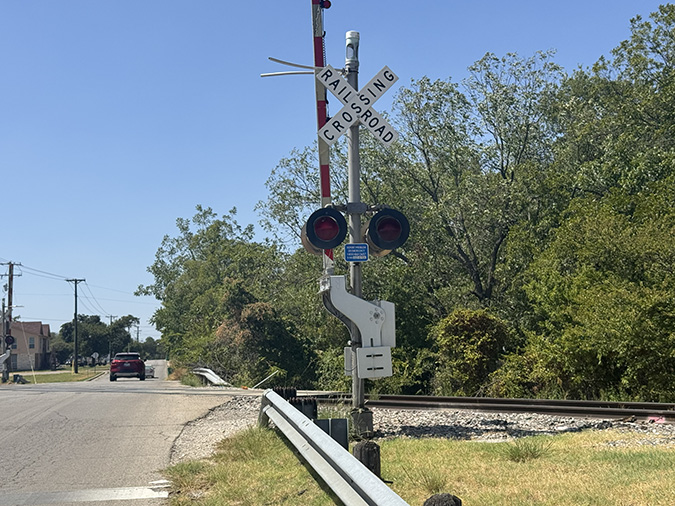
Did you know?
Here are some helpful resources to learn about rail safety: