Environment
How we reduce our impact on the planet and support sustainability.
Our Commitment to Reducing Carbon Emissions
BNSF is committed to reducing absolute scope 1 and 2 Greenhouse Gas (GHG) emissions, as well as the well-to-wheel GHG emissions associated with our locomotives, by 30% by 2030 (from a baseline year of 2018). This target was reviewed, validated and approved by the Science Based Targets Initiative (SBTi). BNSF plans to achieve our goal in two primary ways: by continuing to improve the fuel-efficiency of our trains and through the increased utilization of renewable fuels. To track our progress, BNSF compiles an annual emissions inventory following the GHG Protocol that is validated by an independent third party. BNSF monitors progress on climate-related goals through internal tracking and ongoing leadership oversight.
Two-Thirds to Target
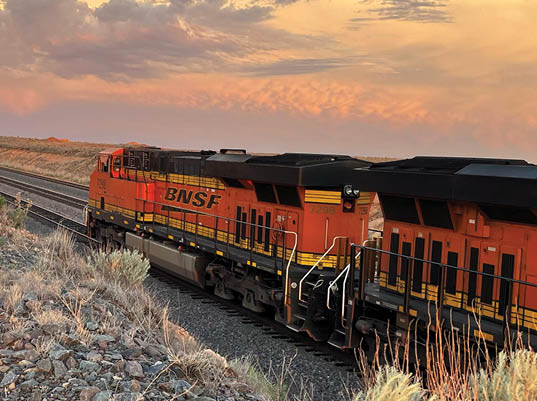
In 2025, BNSF had already reduced its GHG emissions 20 percent since 2018. We are two-thirds of the way to our 2030 target.
Testing Low-Carbon Fuels
In 2025, we continued testing blends of low carbon fuels (biodiesel and renewable diesel) with petroleum diesel. By working with our locomotive manufacturing partners and the other railroads, we are driving to increase the amount of biodiesel and renewable diesel fuels we can use to operate our locomotives, which would translate into significant carbon intensity and emission reductions for our fleet. Initial testing indicates up to 11% biodiesel and up to 50% renewable diesel can be used in our locomotives.
Modernizing our Locomotive Fleet
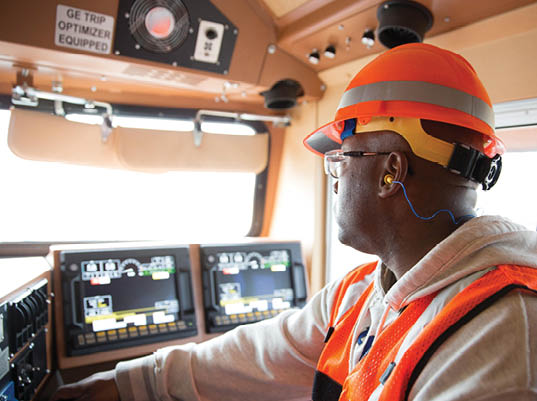
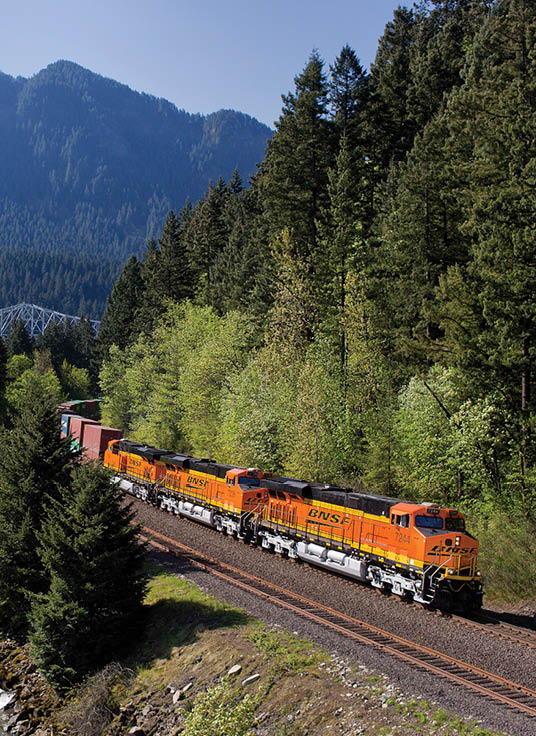
BNSF continues to invest in Tier 4 locomotives, the newest and cleanest-burning line-haul locomotives in North America. For 10 years, we have focused on acquiring Tier 4s, which are designed to reduce criteria pollutant emissions up to 85% versus Tier 0 locomotives. BNSF currently operates 360 Tier 4 Units, and 63 percent of our active fleet is Tier 2+ or better.
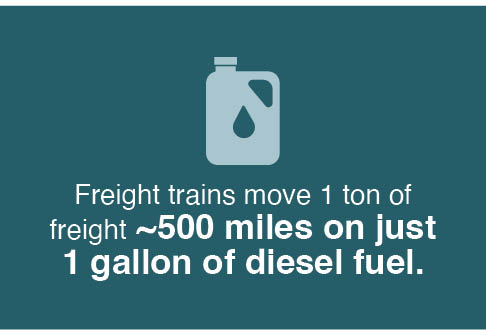
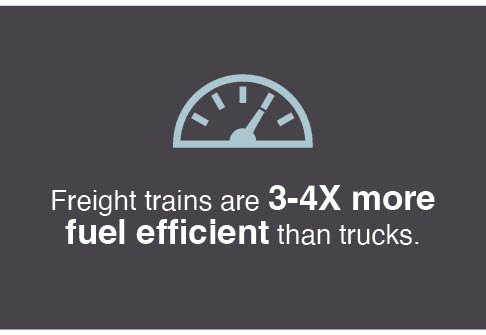
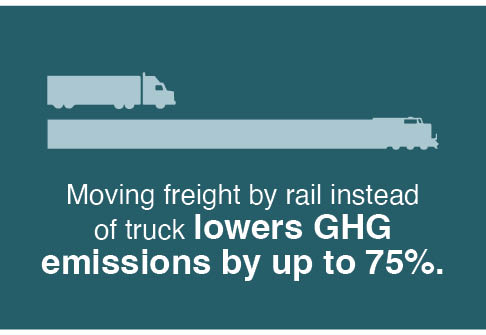
Source: Association of American Railroads (AAR)
Fuel Efficiency Improvement
BNSF is increasing the fuel efficiency of our operations, with systems and initiatives including:
- Energy Management Systems (EMS) – More than 4,000 locomotives have been equipped with EMS, which allows the throttle and dynamic brakes to be controlled automatically. EMS factors the train makeup (length, weight and horsepower), track geometry, grade, curvature and speed restrictions to determine the most fuel-efficient way to operate the train across a territory while maintaining appropriate train handling.
- Automatic Engine Stop/Start System (AESS) – More than 99 percent of our active locomotive fleet is AESS-equipped. AESS automatically shuts down a locomotive that is idling to minimize wasted fuel and eliminate unnecessary emissions. It then automatically restarts the locomotive if needed for power or necessary for the health of the engine.
- Horsepower per Trailing Ton (HPT) Reduction – Practices implemented to minimize HPT include reducing excess horsepower; implementing speed-based throttle limiting to reduce fuel consumption at higher speeds; and isolating, or potentially shutting down, engines when a train has more locomotives than it needs for a given segment of its route.
- BNSF is also funding infrastructure and technology projects that prevent train stops and reduce train resistance by applying a liquid to the rail surface that reduces rolling friction.
Evaluating Climate-related Opportunities and Risks
The evaluation of climate-related opportunities and risks is integrated into BNSF’s risk management processes. These processes are used to evaluate business impacts and inform resource planning. Opportunities and risks identified through this process are discussed with leadership.
We assess climate-related opportunities and risks across multiple time horizons: short-term, medium-term, and long-term. We define time horizons based on our business planning processes and the useful life of key infrastructure assets. We evaluate both physical risks as well as transition risks related to policy, regulatory, and market trends.
Climate-related opportunities and risks often fall within areas that BNSF is already actively managing. For example, we currently guide infrastructure planning toward areas that require greater investment, including projects in regions exposed to wind gust and flood risk. We also consider the potential effects of regulatory changes and evolving customer expectations when developing new services and offerings.
Sustainable Solutions for Customers
Emission Reduction
By utilizing rail – the most environmentally efficient mode of surface transportation – to transport goods, BNSF customers reduce their environmental impact while remaining competitive in the market. While handling 40 percent of the nation’s long-distance freight volume, railroads account for only 0.5 percent of total U.S. GHG emissions and only 1.8 percent of the transportation related emission sources, according to the U.S. EPA. And according to the AAR, if 10 percent of the freight shipped by the largest trucks were moved by rail instead, greenhouse gas emissions would fall by nearly 20 million tons annually.
Customer Collaboration
Through our Sustainable Freight Leadership Council (SFLC), BNSF works with customers on sustainable innovation end markets. The SFLC brings together thought leaders from several industries to build insights and alignment on shared actions to reduce carbon emissions and create more sustainable supply chains.
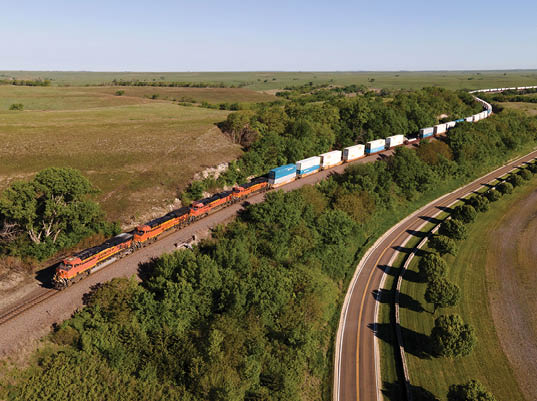
Sustainability Recognition
The annual BNSF Sustainability Awards recognize customers who work with us to make their operations more sustainable. Winners are recognized in categories including Investments in Circular Economy Infrastructure, Supply Chain Efficiencies and Sustainable Technology Implementation.
Winners of the 2025 BNSF Sustainability Awards:
ABF Freight
AG Processing Inc
Albina Asphalt
American Alloy Steel
Amrize
Big River Steel
C.H. Robinson
CF Industries
COSCO SHIPPING Lines
Darling Ingredients
Eco Material Technologies
Eco-Energy
Estes Express Lines
Harvestone
Helm U.S. Corporation
INEOS US CHEMICALS CO
James Hardie Building Products Inc.
Kimberly-Clark
Kiva United Energy
Occidental Chemical Corporation
OOCL (USA) INC
Phillips 66
POET
Ravago
Rust-Oleum
The Greenbrier Companies
Tractor Supply Company
United Sugar Producers and Refiners
Veolia North America
Yang Ming Marine Transport Corp.
Circular Economy Support
BNSF is helping to support new sustainable business markets built around the circular economy, where materials are perpetually reused in closed-loop supply chains and upcycled into higher-value goods. We provide sustainable supply chain solutions for enterprises involved in plastics recycling, low-carbon steel manufacturing, renewable fuels and other emerging markets.

Rail-Served Facility Advantages
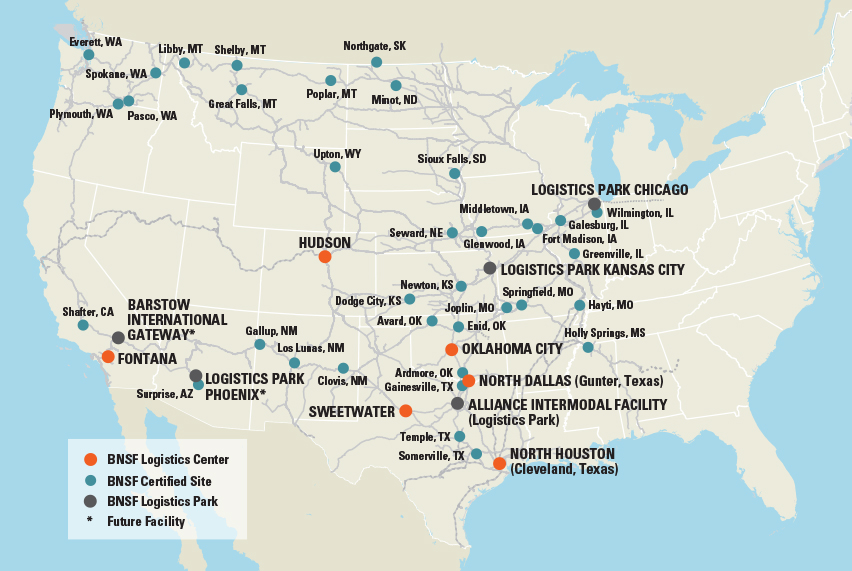
By co-locating with BNSF at a BNSF Logistics Park (for intermodal shippers) or at a BNSF Logistics Center or BNSF Certified Site (for carload shippers), BNSF customers can realize significant sustainability, operational and logistical advantages.
BNSF Logistics Parks are anchored by a BNSF intermodal hub and surrounded by distribution centers to provide streamlined supply chain solutions for intermodal customers. By providing the setup for customers to operate in close quarters with BNSF, we optimize the operating footprint and limit the transportation emissions required between intermodal and distribution activities. Establishing operations at these facilities gives customers direct access to BNSF services and reduces the number of truck miles driven on public roads.
At BNSF Logistics Centers, we invest directly in the development of new facilities and sites in under-serviced, strategic and primarily end-user markets to provide customers a low-carbon solution for moving their carloads. BNSF Logistics Centers serve customers with direct-rail service in multi-customer, multi-commodity business parks that enable us to meet customers where they need efficient transportation solutions most.
BNSF Certified Sites are privately owned business parks along our network that have been rigorously vetted by BNSF, including environmental and infrastructure due diligence, so customers can realize the efficiencies of BNSF rail service faster.
Intermodal Efficiency Initiatives
BNSF has one of the industry’s largest networks of intermodal hubs, serving 40 facilities. We continuously work to increase efficiency and reduce our operational carbon footprint at these locations with leading-edge equipment and technology, including:
- Wide-span electric cranes that produce zero emissions and reduce the number of diesel-powered hostlers required.
- Battery-electric hostlers and forklifts.
- Real-Time Inventory, with a combination of data sources used to simultaneously verify and update inventory operating systems.
- Automated yard checks that utilize image analytics and machine learning.
- Remote cranes at Logistics Park Chicago (LPC) and Memphis.
- Automated Gate Systems (AGS) to speed entry and reduce truck idling on entering intermodal facilities.
- Load Plan Optimization, utilizing an AI-based algorithm that creates a load plan for an outbound train in seconds.
Future Facility Spotlight: Barstow International Gateway
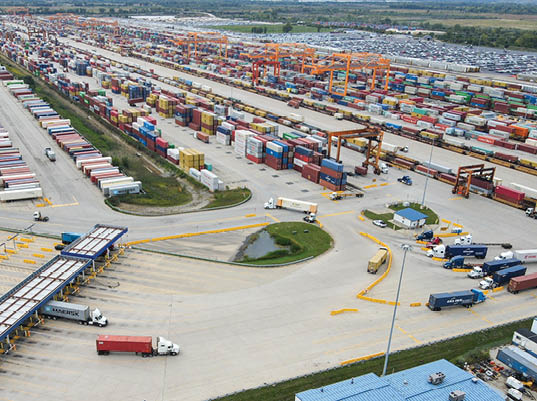
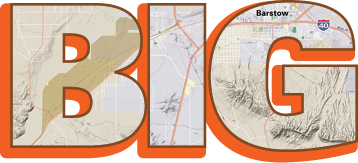
The most advanced energy efficiency systems will be in place at the Barstow International Gateway (BIG). Currently being developed by BNSF, this 4,500-acre project will be a uniquely integrated operation, consisting of a rail yard, intermodal facility and warehouses for transloading freight from international containers to domestic containers. For the first time, the facility will allow the direct transfer of containers from ships at the Ports of Los Angeles and Long Beach to trains headed to BNSF’s mainline. Containers will be processed using zero- and near-zero emission cargo-handling equipment. BIG has the potential to significantly improve network fluidity and efficiency, meaningfully reduce carbon emissions and create thousands of jobs.
Next Generation Cargo Handling
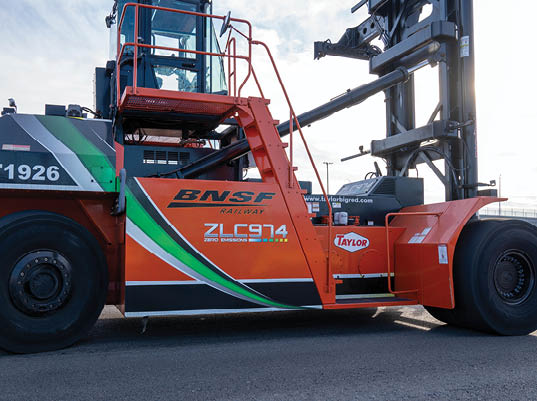
BNSF continues to implement next-generation battery-electric and hybrid-powered cargo-handling equipment at intermodal facilities on the West Coast and in the Pacific Northwest. Electric cargo-handling equipment operates more quietly, more efficiently and more cleanly than traditional diesel machines while reducing impacts on the work environment and surrounding communities. The BNSF Stockton yard is the first fully electric hostler facility in the United States, with 21 hostlers and a hybrid-electric rubber-tired gantry crane, which reduces emissions by 90 percent. The facility also has a 0.75 mega-watt solar array providing renewable energy to feed its electrical grid to charge its equipment. And we estimate battery-electric hostlers in our San Bernardino intermodal facility will reduce 29.5 tons of nitrogen oxides (NOx), 4.3 tons of fine particulate matter (PM2.5), and 3,328 tons of CO2e over the next five years.
Sustainability Initiatives
Sustainable Development
Sustainable development is a cornerstone of the BNSF sustainability strategy. Our sustainable development playbook encompasses the complete process of a BNSF project, from project planning, site selection, design and construction to operation and maintenance. We measure sustainable development throughout a project by its impact on the community, project management, efficient resource allocation, natural world conservation, and climate and resiliency. Our aim is to develop sites that provide business value while minimizing environmental impacts and improving community engagement.
Conservation Commitment
For development projects, natural world conservation is stressed throughout our sustainable development playbook, which directs project teams to look for opportunities to minimize our impacts to natural resources, such as rivers and streams, endangered species habitats and wetlands in watersheds during site-location, site layout and design of development projects. Also, we continue to work closely with partners such as the National Fish and Wildlife Foundation (NFWF) and PNW tribal governments to promote conservation projects. Our ongoing work with the NFWF supports conservation projects by reducing impacts to wildlife across the BNSF system.
Remediation Investment
BNSF actively addresses environmental impacts at legacy sites – locations where predecessor railroads and others may have conducted operations for up to a century. In the last decade, we have rehabilitated approximately 80 sites and invested approximately 190 million toward remediation efforts.
Recycling & Other Initiatives
BNSF engages in an intensive recycling program, with materials recycled in 2025 including:
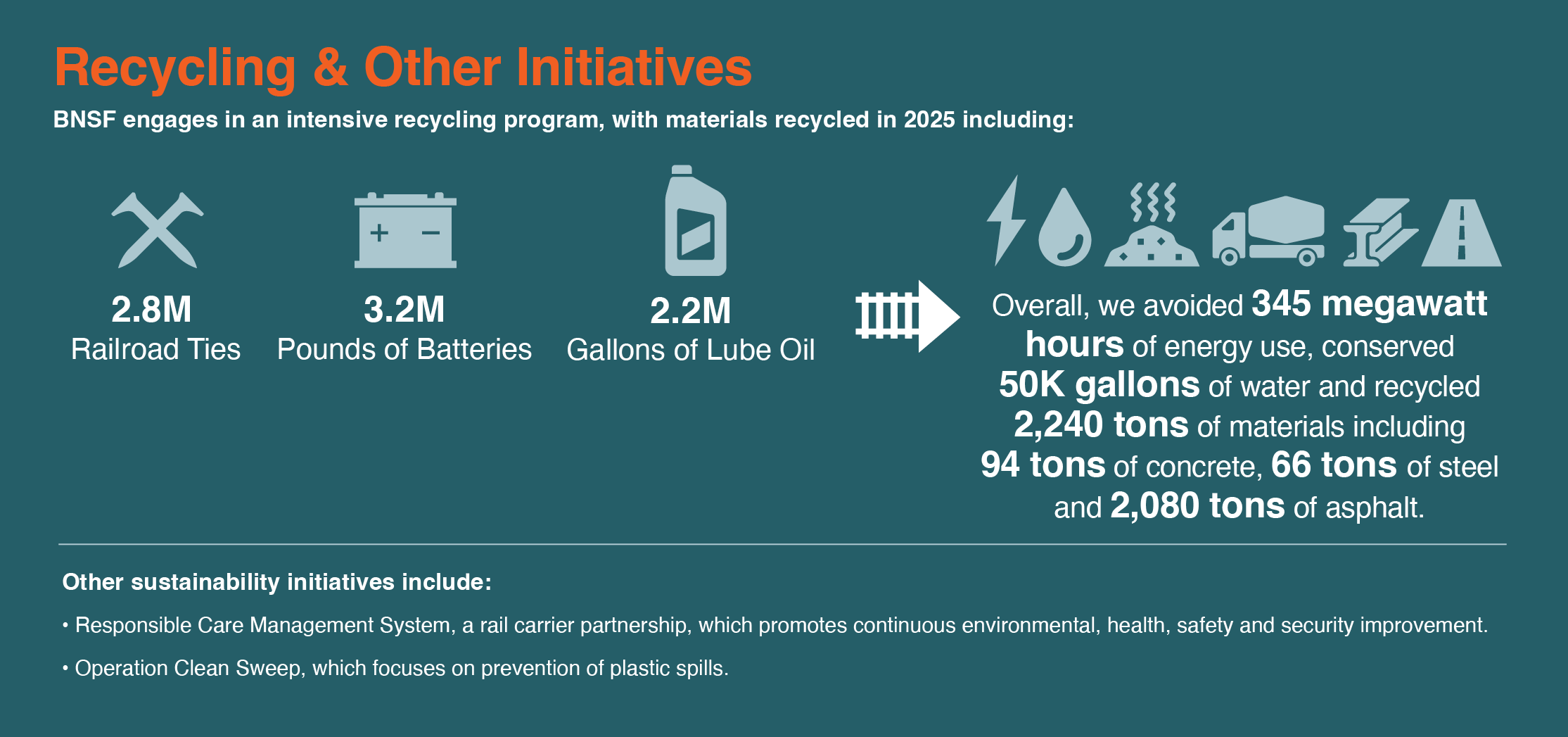
Other sustainability initiatives include:
- Responsible Care Management System, a rail carrier partnership, which promotes continuous environmental, health, safety and security improvement.
- Operation Clean Sweep, which focuses on prevention of plastic spills.
Sustainability Guidance
BNSF continues to manage our commitment to pollution prevention and environmental stewardship through our Sustainable Operations Program (SOP). The SOP provides ongoing guidance and best management practices in areas including:
- Fueling
- Maintenance
- Wastewater
- Stormwater
- Waste Management
- Equipment/Materials Storage
- Property Operations & Maintenance
- Contractor/Leased Operations
- Construction and Expansion Activities
- Transportation Operations
- Adjacent Sensitive Receptors
- Agency/Community Involvement